
Starting a career in auto repair can be both exciting and challenging for new hires. This guide provides essential tips to help you excel in your automotive repair role. With the right guidance, safety practices, and diagnostic knowledge, you can become a skilled and respected auto repair technician. Learning foundational skills early sets the stage for career growth and long-term success in this dynamic field.
Auto repair is an industry that evolves constantly, requiring technicians to adapt to new vehicle technologies, software systems, and repair techniques. Building a strong understanding of both mechanical and electronic systems early on helps new hires tackle complex issues with confidence. Additionally, cultivating good communication and customer service skills enhances your ability to explain technical problems and solutions effectively, making you a more complete and trusted technician. By combining technical knowledge, safety awareness, and interpersonal skills, new hires can establish a strong foundation for a rewarding career.
How to Diagnose a Car Problem
Understanding Basic Diagnostic Tools
The foundation of diagnosing car issues lies in understanding essential diagnostic tools such as OBD-II scanners, multimeters, and vacuum gauges. These instruments help technicians quickly identify problems and verify successful repairs. Practicing with these tools improves accuracy, efficiency, and confidence, while keeping up with updates ensures your skills remain relevant. A clear understanding of diagnostics also aids in communicating vehicle issues to clients, building trust and professionalism.
Recognizing Symptoms and Causes
New technicians must learn to recognize common vehicle symptoms like warning lights, unusual noises, or vibrations. For instance, a high-pitched squeal often indicates worn brake pads. Understanding the link between symptoms and root causes allows technicians to formulate effective repair strategies. Experience, observation, and familiarity with recurring patterns across car models reduce diagnostic time and increase accuracy.
Steps in a Systematic Diagnostic Approach
A methodical diagnostic approach begins with confirming the customer’s complaint and inspecting the vehicle. Use both visual checks and diagnostic tools to narrow down the issue, then confirm the root cause before developing a repair plan. This prevents unnecessary part replacements, ensures thorough repairs, and enhances customer satisfaction. Concluding with a road test verifies repair success and may reveal additional issues, helping new hires develop precision and reliability in their auto repair work.
Best Safety Practices in Auto Repair
Essential Safety Gear
Safety is critical in the auto repair industry. Personal protective equipment (PPE) like gloves, safety glasses, and steel-toed boots reduces injury risks, while properly maintained lift systems and jack stands protect both technicians and vehicles. Regular training reinforces proper use of safety equipment and cultivates a “safety-first” culture in the shop.
Hazard Awareness
Being aware of hazards such as slips, electrical shocks, and chemical exposure is key to accident prevention. Organized workspaces, clearly labeled hazards, and proactive measures like spill cleanup create a safer environment. Incorporating safety drills, case studies, and employee feedback fosters continuous improvement and reduces workplace incidents.
Proper Handling of Chemicals
Handling and disposing of automotive chemicals responsibly protects both employees and the environment. Following safety data sheets, OSHA guidelines, and certified waste disposal procedures ensures compliance. Using eco-friendly alternatives where possible further minimizes risk and demonstrates commitment to sustainable practices.
Key Skills for Auto Repair Technicians
Technical Skills
Technical proficiency is essential for auto repair technicians. Understanding mechanical, electrical, and computerized systems requires ongoing training, certification programs, and hands-on practice. Specializing in hybrid or electric vehicle repairs, mastering advanced diagnostics, and staying current on regulations and safety standards enhances expertise and job opportunities.
Customer Service and Communication
Excellent communication complements technical skills in auto repair. Explaining issues in clear, accessible language and actively listening to customer concerns builds trust. Setting realistic expectations about timelines and outcomes, handling complications with tact, and using digital platforms for updates improve client satisfaction and retention.
Time Management and Efficiency
Time management ensures high productivity in busy auto repair shops. Prioritizing tasks, maintaining an organized workspace, and streamlining repair processes increase efficiency without compromising quality. Standardizing common repair procedures and monitoring workflow bottlenecks helps shops operate smoothly, while maintaining work-life balance prevents burnout and sustains performance.
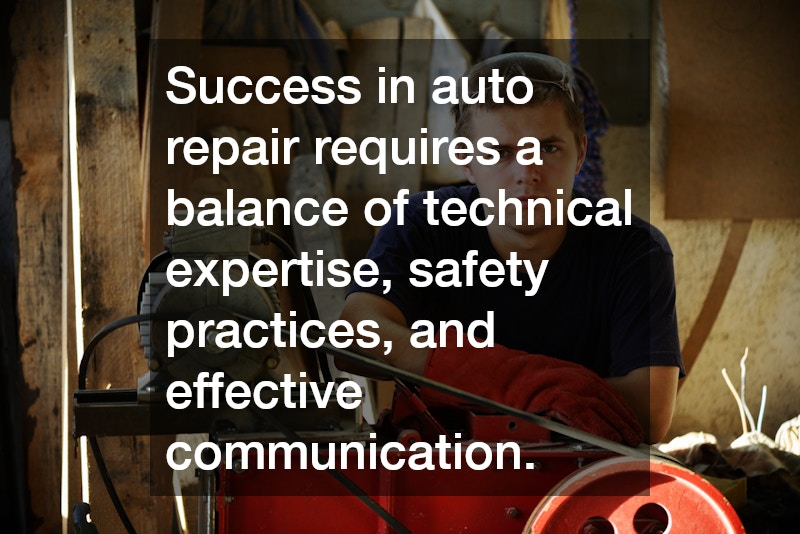
Success in auto repair requires a balance of technical expertise, safety practices, and effective communication. New hires should embrace learning, prioritize safety, and develop diagnostic precision to excel in their roles. By refining skills, staying current with technology, and managing time efficiently, technicians can become trusted and competent professionals. Dedication to these principles ensures growth, client satisfaction, and long-term success in the auto repair industry.